Use capri trousers as a deliberate length choice
Capri trousers make a shorter leg length an obvious part of an outfit. The useful questions concern the actual opening, fabric and visible relationship to the rest of the clothes. This exercise avoids body-proportion rules and begins with the garment you want to wear.
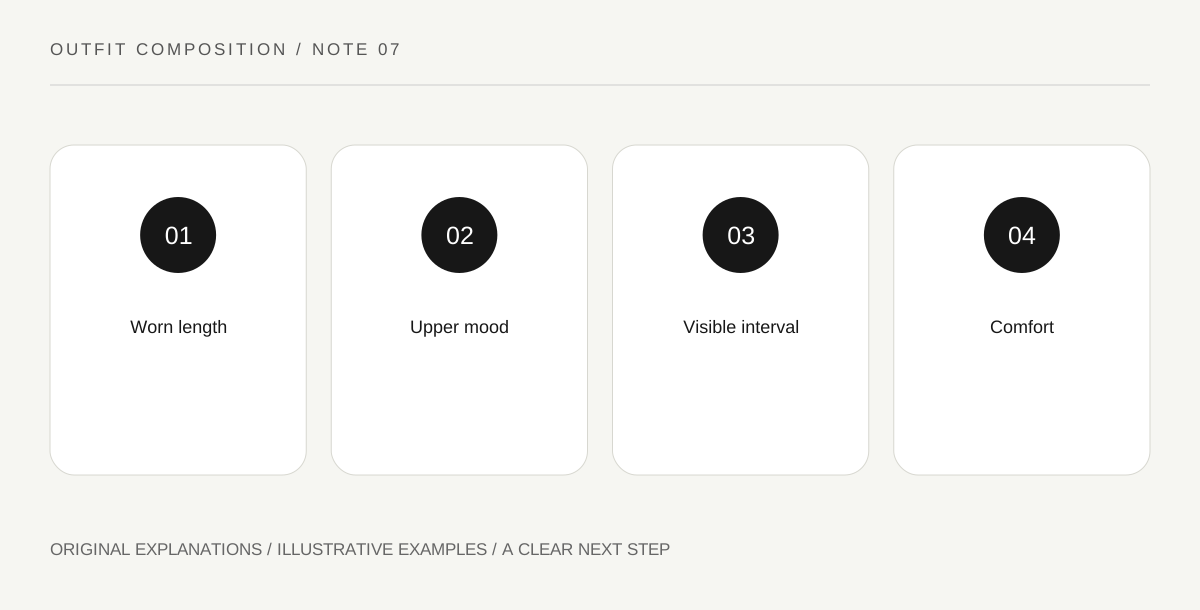
Original explanatory diagram. Read the full method and limitations below.
Describe the length precisely
Observe where the trousers end on you while standing and sitting. A product label does not establish one universal capri length, and a model’s photograph may show a different worn position. Notice whether the opening is narrow, straight or slightly flared. These details affect the shape more directly than calling the garment retro. Write a simple description such as slim opening below the knee to guide the rest of the comparison.
Choose the mood through the upper garment
A crisp sleeveless shirt can make the shortened trouser line feel graphic. A soft loose blouse can give the same trousers a less angular companion. Neither requires adopting an entire historical theme. Try the tops at their natural worn lengths first, then observe the division between upper and lower areas. You are choosing a composition, not attempting to lengthen or shorten the appearance of a body part according to a universal target.
Keep the exposed interval intentional
Look at the area between trouser opening and shoe, including any sock you want to show. The interval is part of the outfit and can change when seated. Compare an unobtrusive shoe with a stronger shape if both are comfortable options. Choose based on the complete relationship rather than assuming that capris demand a particular heel height. Walking needs and the actual setting remain practical parts of the decision.
Test the opening during ordinary movement
Bend the knee, sit and take several normal steps. A narrow opening should not make the garment uncomfortable for the day’s tasks. Notice whether the hem catches or rides into an unwanted position. If the cut does not suit the movement you need, consider another pair rather than forcing the outfit through posture. Record the top and footwear you liked, along with the actual length and opening that made the combination useful.
Illustrative worked example
Illustrative outfit: A reader chooses black capris with a straight opening and a pale sleeveless shirt. She compares a light shoe with a dark one and prefers the dark shape because it makes the lower portion more graphic. After sitting, she checks that the trouser opening remains comfortable. Her note describes the opening and chosen visible interval, rather than claiming that one capri length suits every woman.
Questions that come up
Are capris limited to a retro look?
No. Historical associations are only one possible reference. A contemporary companion can create a different effect without denying the trouser’s visible length.
Do I need heels with a short trouser?
No. Select comfortable footwear suited to the setting. There is no requirement to use height as a correction for the garment length you chose.
References and scope
These sources support the factual background. Examples and exercises are original illustrative teaching material. References do not imply endorsement.
- V&A Fashion collection — Primary visual references for examining silhouette, construction and decorative relationships; the styling exercises here are original.
- V&A Introduction to 1960s fashion — Museum context for distinct silhouettes and the importance of viewing garments as complete designs.