Use a polo shirt’s collar and placket as the starting point
A polo top has a recognizable opening, collar and sleeve shape. Those details can create a useful outfit without requiring a sporty theme from head to toe. This study asks how the actual shirt’s structure relates to a skirt, tailored trousers or another familiar lower garment.
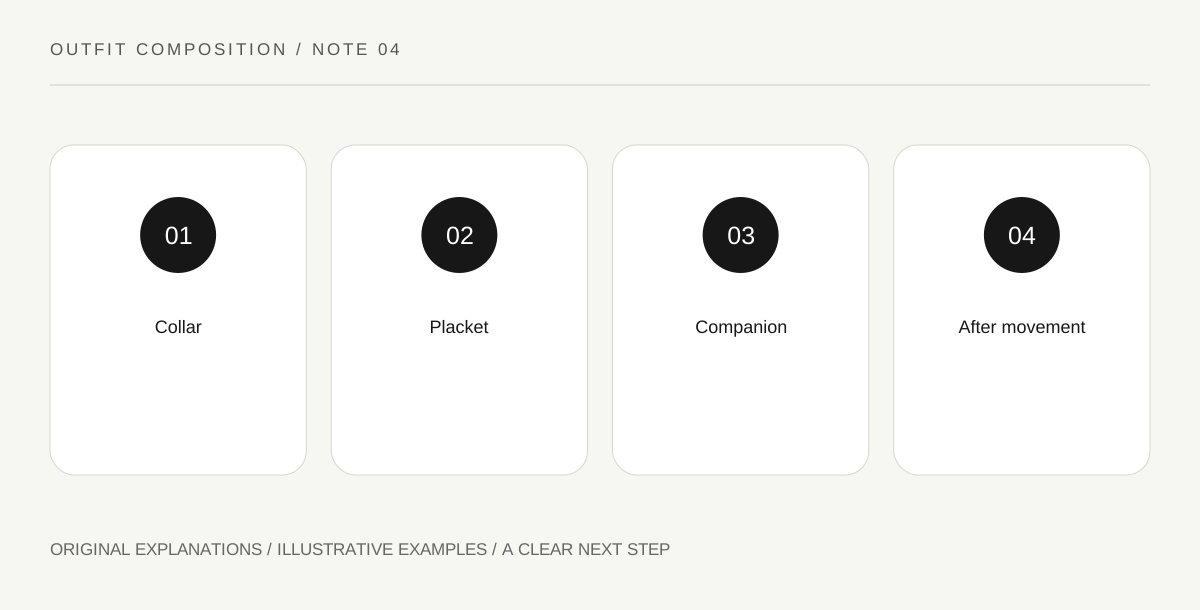
Original explanatory diagram. Read the full method and limitations below.
Identify the shirt’s strongest feature
A broad collar may dominate one polo, while another has a fine placket and barely visible buttons. Notice the sleeve length and the way the lower edge sits. A fitted ribbed polo and a loose cotton version are different garments even when they share a name. Describe your actual shirt in three concrete observations before deciding which other piece should accompany it. This prevents the category label from doing all the thinking.
Choose how open the neckline feels
Use only the closures as designed and try the comfortable arrangements available. A more closed placket can make the collar area read as a compact shape; an open one can create a longer opening. You do not need to add a necklace to fill every gap. If jewelry is included, observe whether it sits inside the opening, overlaps the buttons or creates a second detail competing for attention.
Give the lower garment an intentional role
Tailored trousers can place a clean vertical structure beside the polo’s collar. A simple skirt can create a different division between upper and lower areas. Compare actual waist and hem relationships rather than assuming that a polo always needs jeans. The lower garment does not have to cancel the shirt’s casual associations. It can continue them, complicate them or introduce a clear contrast that you enjoy.
Check the collar after ordinary movement
Put on the outer layer you may need, then remove it and see how the collar sits. Reach forward, sit and carry your usual bag. If the collar folds into an uncomfortable position or the placket pulls, address the fit or pairing before adding decorative fixes. A practical outfit should allow the shirt’s recognizable details to behave normally instead of requiring constant rearrangement to preserve one carefully posed view.
Illustrative worked example
Illustrative outfit: A dark green polo with a broad collar is paired with cream straight trousers. The reader leaves the neckline free of jewelry so the collar remains the main upper detail. She then tries a narrow necklace and finds that it crosses the top button in a way she dislikes. She removes it, keeping a small earring instead, and checks the collar after wearing her jacket over the combination.
Questions that come up
Does a polo require sports shoes?
No. Choose footwear for the setting and your comfort, then judge the complete outfit. The shirt’s familiar associations do not prescribe every surrounding piece.
Should I add jewelry to an empty neckline?
Only if you like the result. Visible space can be part of the composition, and the collar may already provide enough detail for your preference.
References and scope
These sources support the factual background. Examples and exercises are original illustrative teaching material. References do not imply endorsement.
- V&A Fashion collection — Primary visual references for examining silhouette, construction and decorative relationships; the styling exercises here are original.