Build a wrap-dress outfit around the overlap you actually wear
A wrap dress has a changing front created by overlap and fastening. Begin with how that construction sits on you during ordinary movement, then choose the surrounding outfit. Decorative additions should support a wearing arrangement that already feels comfortable and secure.
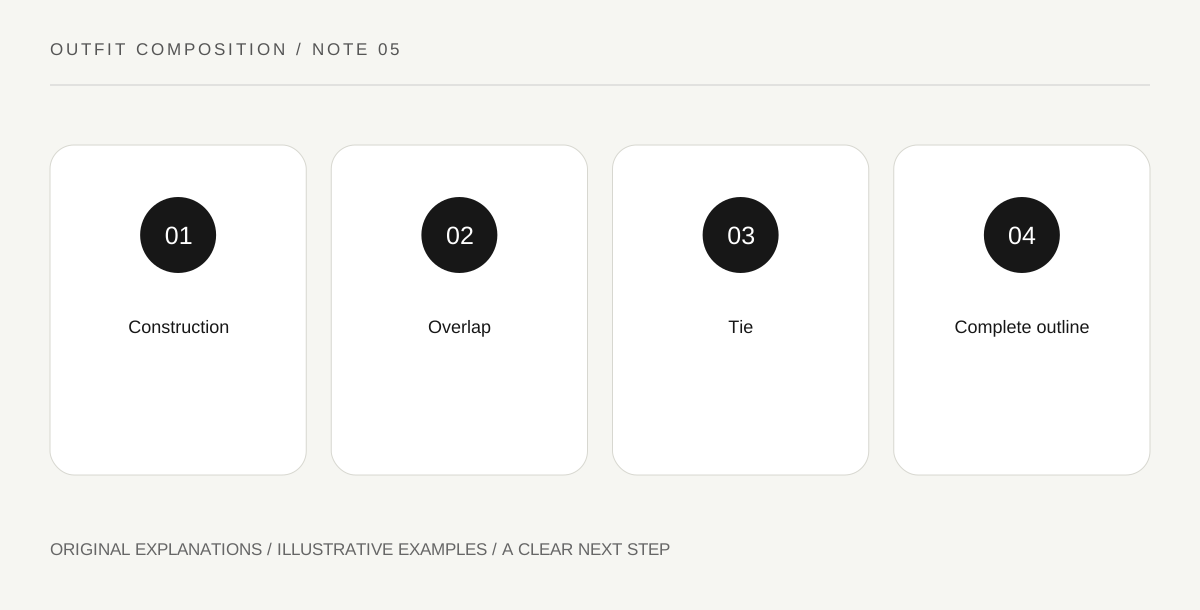
Original explanatory diagram. Read the full method and limitations below.
Understand the intended fastening
Follow the garment’s designed tie, button or other closure arrangement. Some dresses only resemble a wrap while using a fixed front. Identify which construction you have before copying a styling photograph. The overlap should be assessed on the worn garment, with the underlayers you prefer. If you are uncertain how a closure should work, ask the maker or an appropriate alteration professional rather than improvising a fastening that may damage the material.
Check the front in use
Sit, take a normal step and reach as you would during the day. Observe how the neckline and skirt overlap change. This is a check of the garment’s suitability for your preferences, not a demand to alter your movement to keep a pose. If you want more coverage, an appropriate base layer or another dress may be more useful than an accessory intended to conceal a persistent fit issue.
Choose whether the tie should stand out
A side knot can become a visible feature, especially when its ends create a strong line. You can let that detail lead and keep nearby accessories quiet. If a jacket covers the tie, observe whether it creates a lump or pulls the dress. The fastening has a practical job as well as a visual one. Avoid tightening it solely to produce a smaller-looking waist if that reduces comfortable movement.
Complete the outfit around its changing shape
A simple shoe and restrained bag can leave the wrap’s diagonal line clear; a more detailed companion creates a busier composition. Compare both if available. Look from the side as well as the front, because overlap and tie placement can change the outline. The useful final note names what works: comfortable overlap, tie clear of the jacket, and enough freedom for the activities actually planned.
Illustrative worked example
Illustrative fitting study: A reader tries a patterned wrap dress with a short open jacket. While seated, the jacket presses against the side knot. She compares a longer open layer with more space at that point and prefers its behavior. She keeps the neckline arrangement she already finds comfortable, then selects a simple bag so the print and diagonal wrap line remain the main visual features of the outfit.
Questions that come up
Should I use a pin to solve every overlap problem?
No. Fabric, placement and garment construction matter. Ask an appropriate professional when a secure alteration is needed rather than risking damage with an improvised fix.
Must the tie be the outfit’s focal point?
No. You can let it remain a quiet functional detail. The decision depends on the actual dress, print and companions you choose.
References and scope
These sources support the factual background. Examples and exercises are original illustrative teaching material. References do not imply endorsement.
- V&A Fashion collection — Primary visual references for examining silhouette, construction and decorative relationships; the styling exercises here are original.