Treat a trench coat as a moving outer frame
A trench-style coat can add lapels, tabs, buttons and a belt to an outfit before any accessory appears. Study it as an outer frame with its own moving parts. The goal is a comfortable arrangement that works both open and in the closure position you actually use.
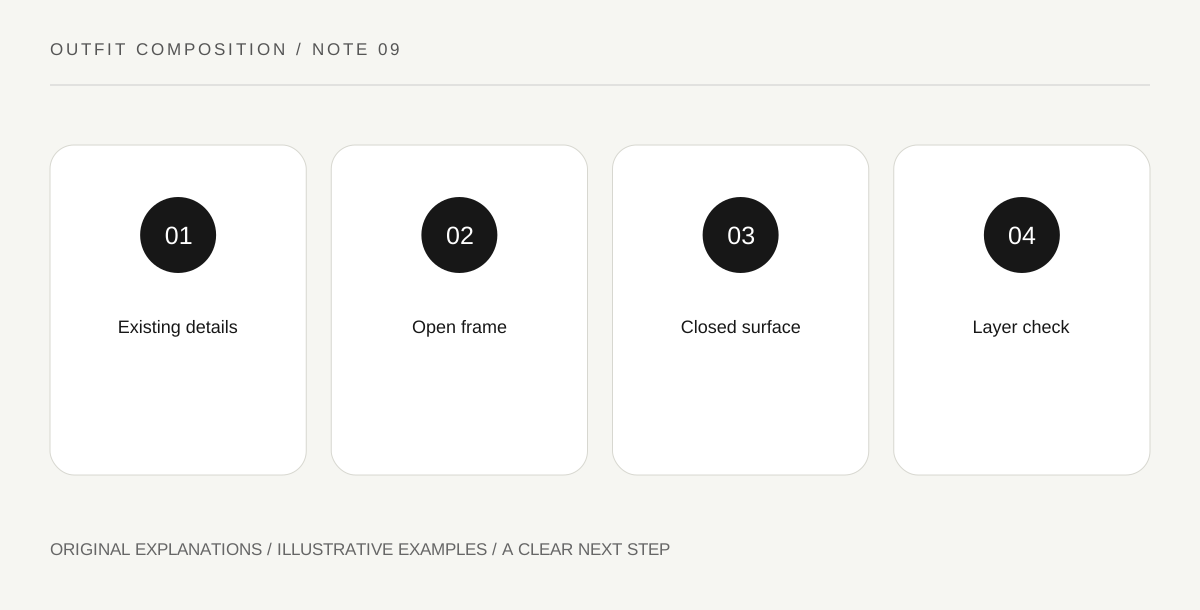
Original explanatory diagram. Read the full method and limitations below.
Count the details already present
Look at the actual coat rather than an imagined classic version. It may have large lapels, a shoulder panel, double rows of buttons or a very simple front. Choose the feature you enjoy most. The coat’s complexity can guide how much additional detail you want beneath it. This does not mean a detailed coat prohibits patterned clothes; it means you can make that combination knowingly rather than add elements without seeing the existing design.
Compare open and closed views
Open, the coat frames a central strip of the underlying outfit. Closed, its own front becomes the main surface. Try both views because a combination that relies on a visible inner color may look different when the weather or setting calls for closure. You do not need to make the two views identical. Decide whether you like each one and whether the transition between them requires any awkward rearrangement.
Give the belt a practical plan
Use the belt and loops as designed, checking the comfortable tension and where the ends rest. If you wear the coat open, secure or arrange the belt in a way appropriate to its construction so it does not drag or catch. Do not copy a dramatic knot if it strains the fabric or makes the closure difficult for you. The visual line should serve the way you handle the coat during an ordinary day.
Check the layers at shoulders and sleeves
Reach forward, put on your bag and sit with the coat in the position you expect to use. Notice whether an inner sleeve bunches or a collar interferes with the lapels. A thin-looking layer can still create friction, so assess the actual combination. Follow the coat’s own care directions and any maker guidance for fastening details. Finish by recording which inner collar and bag strap worked comfortably with this particular outer frame.
Illustrative worked example
Illustrative outfit: A beige trench with broad lapels frames a dark blue simple neckline and straight trousers. The reader tries a large necklace, then removes it because she prefers the lapels as the main upper detail. She compares the coat open and closed, arranges the belt securely for each use and checks whether her shoulder bag pulls one lapel out of the position she wants.
Questions that come up
Must every trench be tightly belted?
No. Choose among the garment’s intended wearing arrangements according to comfort and preference. A tight belt is not a requirement for a complete outfit.
Does trench style guarantee rain protection?
No. A visual category does not establish a technical performance claim. Consult the actual product information when weather protection is important.
References and scope
These sources support the factual background. Examples and exercises are original illustrative teaching material. References do not imply endorsement.
- V&A Fashion collection — Primary visual references for examining silhouette, construction and decorative relationships; the styling exercises here are original.
- FTC Clothes Captioning — Garment care instructions and the importance of reading the complete care label.