Wear a sequin piece with a quiet surface beside it
A sequin garment changes as light and movement strike its surface. You can enjoy that effect in a small area or a large one. This study begins with the actual sparkle pattern, then chooses a companion that gives it the amount of attention you want.
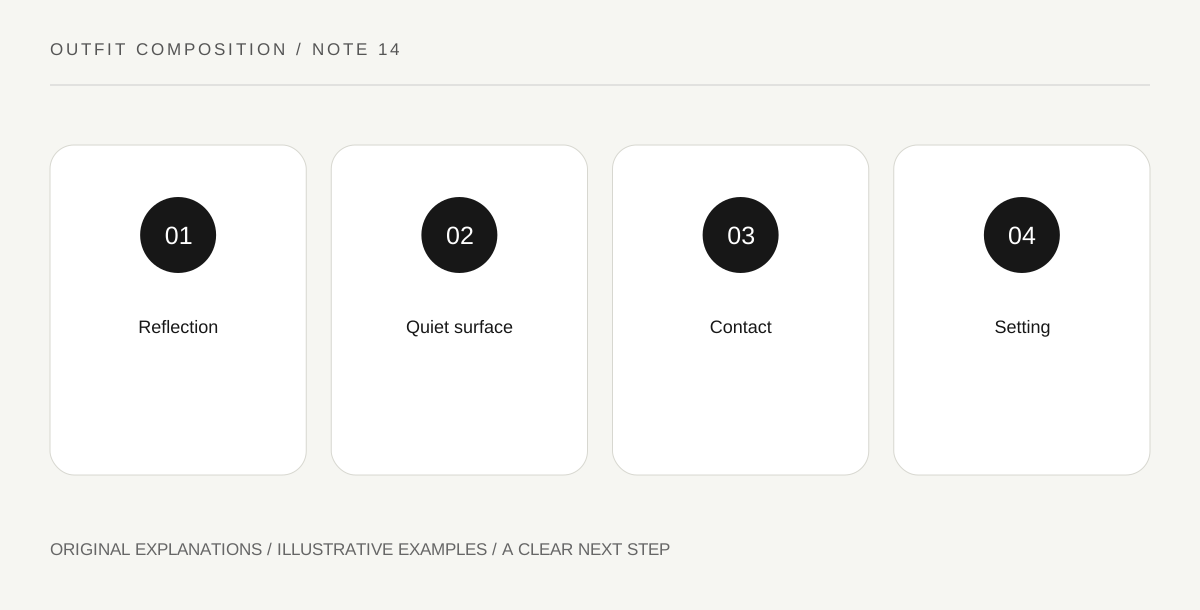
Original explanatory diagram. Read the full method and limitations below.
Observe sparkle from ordinary distance
Move the garment gently while wearing it as intended. Large flat sequins can produce a different pattern of reflections from tiny closely packed ones. A photograph may freeze one bright moment that is not the constant appearance. Look at the whole garment from a normal conversational distance, then note whether the effect reads as scattered points, a continuous shimmer or distinct reflective shapes. These descriptions help you choose companions more precisely.
Choose how much quiet space surrounds it
A plain matte top beside a sequin skirt can leave the lower surface prominent. A simple trouser beneath a sequin top can give the upper area the same role. The quiet companion does not need to disappear; it supplies another surface with a different job. Compare a strong structural edge with a softer one. Either may work, depending on whether you want a graphic division or a gentler transition around the sparkle.
Check contact between garments
Sequins and decorative edges may interact with nearby fabric, hair, jewelry or a bag strap. Assess the actual combination carefully without deliberately rubbing surfaces together. If you notice catching, choose another companion or seek maker guidance rather than assuming that all delicate materials are compatible. A visually attractive pair should not require accepting avoidable damage or discomfort. Read the garment’s own care information before planning it as a frequent-use piece.
Decide what changes for the setting
An outfit can keep the sequins visible while using everyday companions. You do not need to apologize for the garment or disguise it as plain clothing. Consider the activities and surroundings: a crowded seat, a shoulder strap or repeated outer-layer changes may affect practicality. Finish by identifying the sequin area, the quiet area and any contact points you checked. This creates a repeatable choice without imposing a day-versus-night rule.
Illustrative worked example
Illustrative outfit: A silver sequin top is paired with dark matte trousers. The reader first tries a textured scarf, then removes it after noticing that it may catch at the neckline. A simple open jacket leaves the central shimmer visible without adding another busy surface. She checks her bag strap placement and chooses the combination for a seated indoor gathering where she can handle the decorative garment comfortably.
Questions that come up
Are sequins only for evening?
No. Their use is a style and setting choice. The useful question is whether you enjoy and can comfortably wear the actual combination for the planned activities.
Can a plain companion still have shape?
Yes. Quiet surface does not mean shapeless. A clear cut can provide structure while leaving the sequins as the main reflective feature.
References and scope
These sources support the factual background. Examples and exercises are original illustrative teaching material. References do not imply endorsement.
- V&A Fashion collection — Primary visual references for examining silhouette, construction and decorative relationships; the styling exercises here are original.
- FTC Clothes Captioning — Garment care instructions and the importance of reading the complete care label.