Make a sheer blouse and its underlayer one complete design
A sheer blouse reveals part of the layer beneath it, so that layer participates in the outfit. Choose the relationship deliberately: close in color, visibly contrasting or concentrated at a particular neckline. Your own coverage preference should guide the combination from the beginning.
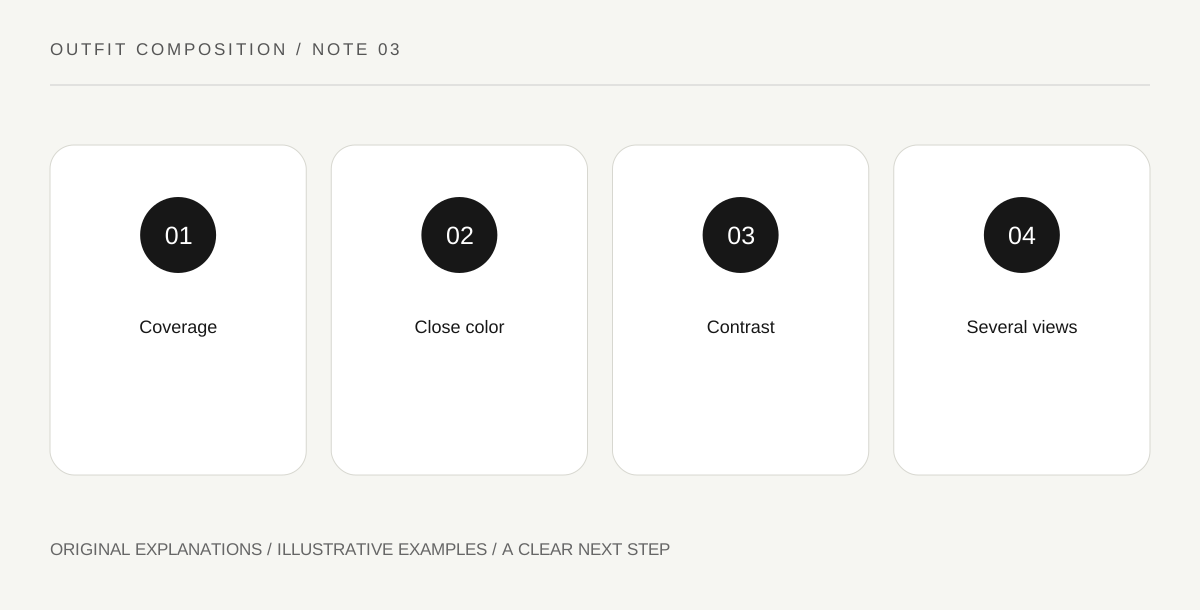
Original explanatory diagram. Read the full method and limitations below.
Map what the blouse actually reveals
Try the blouse over a familiar base in the light where it will be worn. Observe the body, sleeves, seams and areas under tension separately. A garment can be more transparent in one place than another. Do not judge coverage only from a folded swatch or a shop photograph. Decide which areas you want covered before selecting accessories or an outer layer intended to complete the look.
Compare a close-color base
A base near the blouse’s color can reduce the visual division between layers, although differences in texture and opacity may remain visible. The purpose is a quieter relationship, not a promise of invisibility. Check the base’s neckline, arm openings and length as actual shapes beneath the blouse. If an edge appears through the fabric, decide whether you like its position rather than automatically assuming that every visible line must be hidden.
Compare an intentional contrast
A dark base under a pale blouse can make the transparent layer and its construction more apparent. A base with a clear square or rounded neckline introduces another shape. Try one contrast at a time so you can understand what attracts attention. The base should fit comfortably on its own and allow the movement you need. A decorative contrast does not require an uncomfortable layer or a garment arrangement that only stays in place for a photograph.
Observe the full outfit from several views
Look while seated, reaching and turning. A blouse opening or underlayer edge may shift in ways a front-facing still view does not show. Choose a lower garment that supports the intended effect without requiring more and more corrective layers. If you prefer greater opacity, choose another base or blouse instead of treating your comfort as a styling obstacle. A successful composition includes the way you want to feel while wearing it.
Illustrative worked example
Illustrative comparison: A pale blue sheer blouse is tried over a pale blue sleeveless base and then a navy square-neck base. The first version looks more continuous; the second makes the base’s neckline an obvious design feature. The reader chooses navy, repeats a small dark detail elsewhere and checks the blouse while seated. She keeps the contrast because she enjoys it, not because either underlayer is universally more appropriate.
Questions that come up
Must the base match my skin tone?
No. That is one possible visual choice, not a requirement. A close garment color or an obvious contrast can also be deliberate.
Can a jacket solve an unwanted transparency issue?
Only while it is worn in the needed position. Choose a base combination you feel comfortable using when the jacket comes off or shifts.
References and scope
These sources support the factual background. Examples and exercises are original illustrative teaching material. References do not imply endorsement.
- V&A Fashion collection — Primary visual references for examining silhouette, construction and decorative relationships; the styling exercises here are original.