Give lace a visible pattern role alongside opaque clothing
Lace can read as a pattern, a transparent layer or a detailed edge. Decide which of those roles you want to emphasize before choosing companions. The same garment may support several interpretations without requiring a romantic theme throughout the entire outfit.
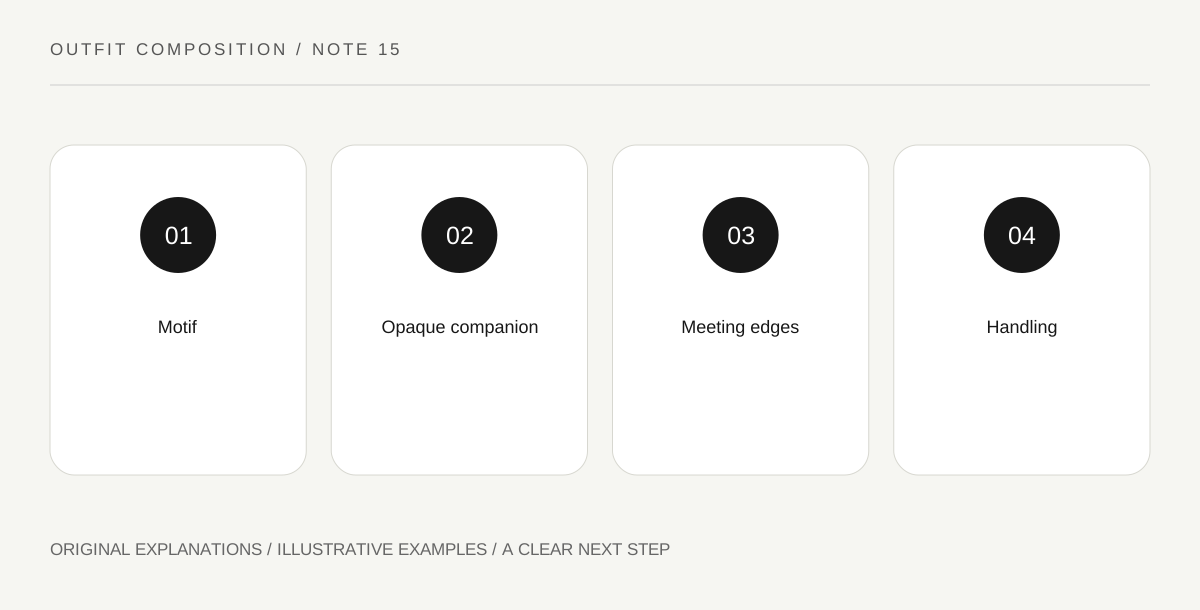
Original explanatory diagram. Read the full method and limitations below.
Identify where the lace is most legible
Look at the garment over the underlayer you intend to use. A contrasting base can make motifs clearer, while a close-color base may create a quieter texture. Observe whether the lace is concentrated at a hem, spread across a panel or used for the whole piece. This tells you where the main detail sits. Do not assume the pattern will read exactly as it does against a shop’s display background.
Choose an opaque companion with a purpose
A smooth opaque shirt can create a clear difference beside a lace skirt. A more textured knit may produce a busier relationship. Try the pieces you already have and describe the change. The opaque garment’s role is not automatically to make the lace respectable or to correct its character. It can frame the motif, repeat a shape or introduce a different surface because that is the composition you prefer.
Compare the edges where they meet
A plain top hem crossing a detailed lace waistband may hide a feature you wanted to show. A lace sleeve beneath an outer layer may reveal only a narrow edge. Neither is wrong, but the visible portion should be the part you actually assess. Look at the combination from normal distance and while moving. A beautiful motif in isolation may become barely visible or unexpectedly busy when layered with another garment.
Keep handling and coverage aligned with preference
Check your preferred coverage while sitting and reaching, and notice possible catching at jewelry, fastenings or bags. Follow the actual care directions for the complete garment, including any lining. A lace appearance does not establish fiber or strength. If you want a more substantial visual effect, consider another base or an opaque companion with more presence rather than adding fragile decorative pieces until the original motif becomes difficult to see.
Illustrative worked example
Illustrative study: A cream lace skirt is tried over its intended lining with a plain navy shirt. The dark upper field makes the cream motifs easier for the reader to notice. She then compares a cream knit, which creates a more continuous texture. She prefers navy for this outfit, checks the shirt hem against the lace detail and removes a bracelet that catches near the skirt when she sits.
Questions that come up
Must lace be paired with equally delicate pieces?
No. A substantial or plain companion can create a contrast you enjoy. Matching every association is optional.
Does a lining settle every coverage question?
No. Check the actual worn garment in relevant conditions and choose the coverage you want. A label or photograph does not replace your own assessment.
References and scope
These sources support the factual background. Examples and exercises are original illustrative teaching material. References do not imply endorsement.
- V&A Fashion collection — Primary visual references for examining silhouette, construction and decorative relationships; the styling exercises here are original.
- FTC Clothes Captioning — Garment care instructions and the importance of reading the complete care label.